Understanding process and interrupt contexts
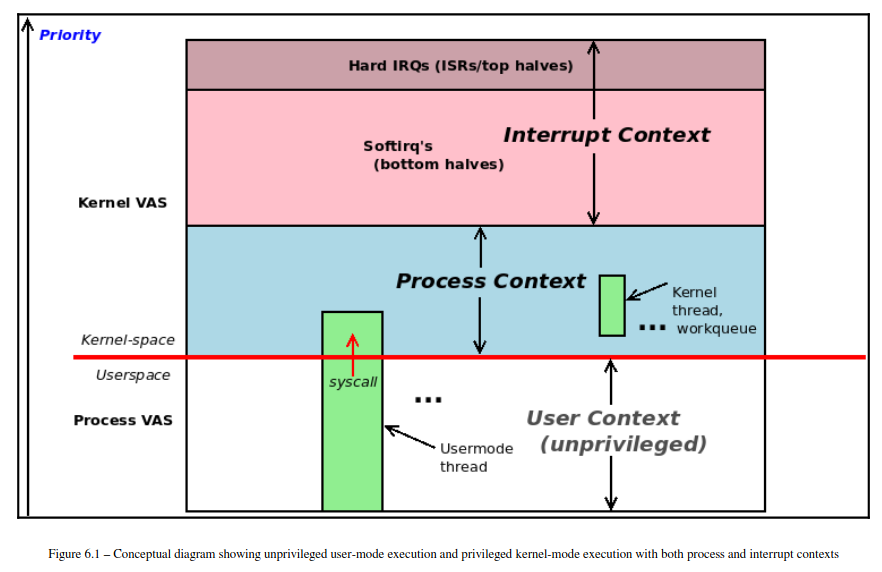 各種 context 有以下的分類
- kernel code
- interrupt context: 可能是來自於 hard ware 的 interrupt
- process context: 來自於 system call 或是 exception
- user space
- user context
在接下來的內容中,可以留意現在是在討論這三種 context 的那一個分類裡
Understanding the basics of the process VAS
大致上一個 process 的 virtual address space 長成下面這個樣子
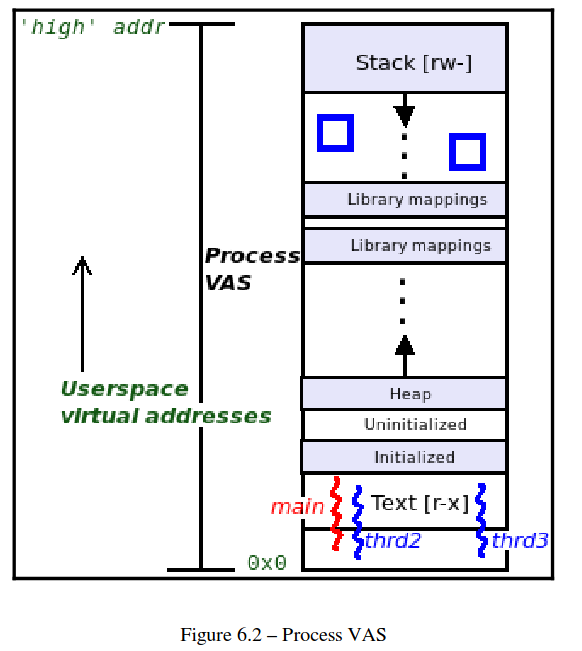
- Text segment: 這是 machine code 存放的地方
- Data segment
- Initialized data segment: 已經初始化的變數
- Uninitialized data segment: 還沒有被初始化的變數,有時候會被稱為 bss
- Heap segment: 被
malloc()或是mmap()出來的區域會放在這裡 - Libraries (text, data)
- Stack: 這個區域會對應到 function call 的過程
Organizing processes, threads, and their stacks – user and kernel space
thread 可以想成是 registers + stack 的組合,其他的資源都是跟 process 共用的 這本書會把重點著重於 thread 因為在最原始的 Unix 理念中
Everything is a process; if it’s not a process, it’s a file
這句話雖然在當今也算是正確的,不過
The thread, not the process, is the kernel schedulable entity
在當今會更加貼切一些
每一個 thread 都會有一個對應的 task structure (也被稱為 process descriptor)
下一個重點為:
we require one stack per thread per privilege level supported by the CPU
所以可以得到下一個結論
every user space thread alive has two stacks
- A user space stack
- A kernel space stack: 進入到 kernel mode 之後才會用這個 stack
但如果是 kernel thread 的話,就只會有一個 kernel thread
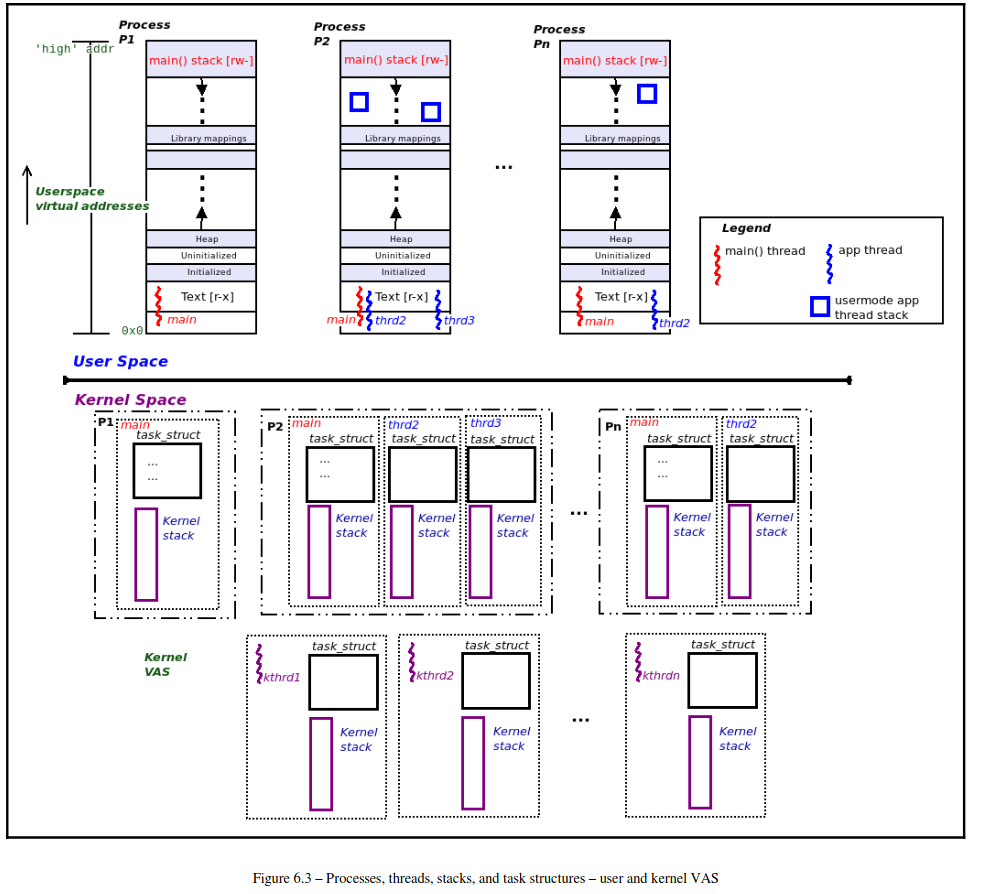
整個架構長成這個樣子
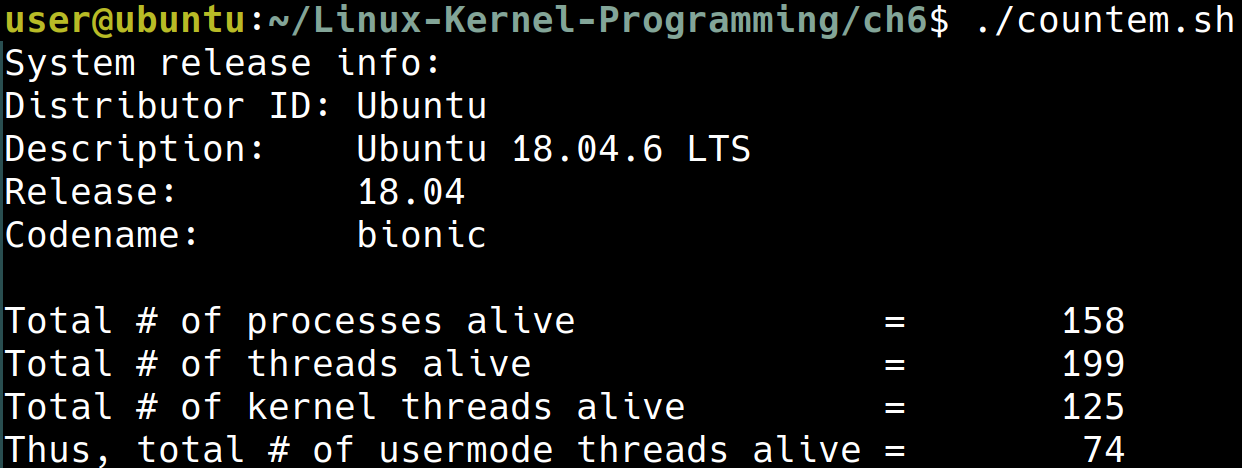
cd ~/Linux-Kernel-Programming/ch6/
./countem.sh